The Best Stud Finder for Home Use
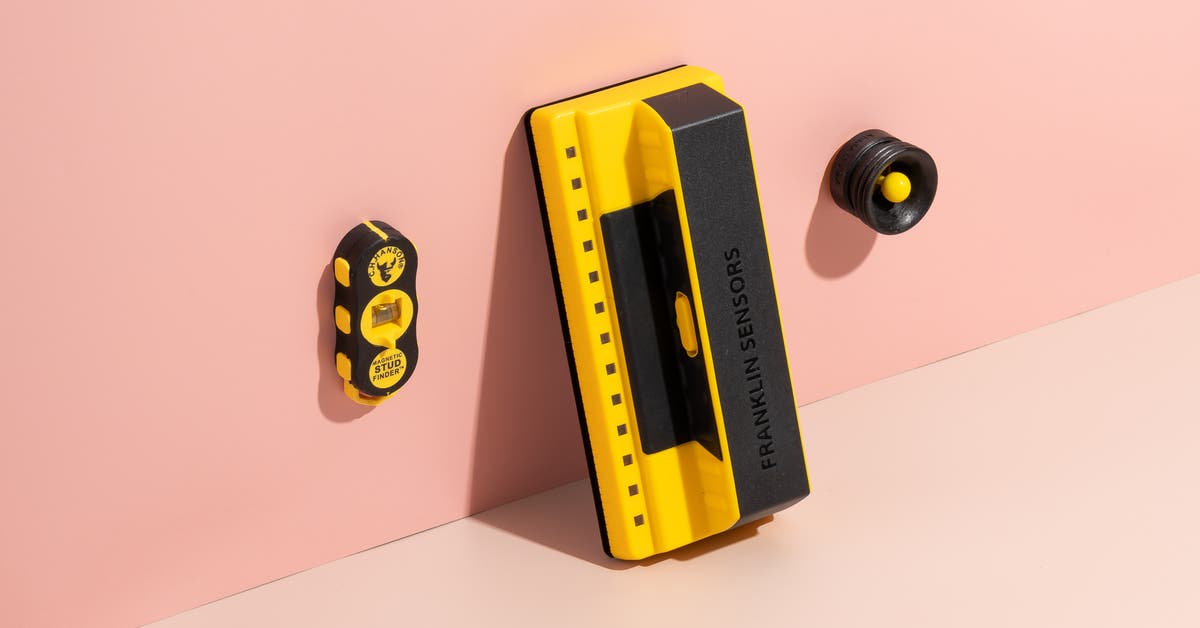
Since our initial testing, Franklin Sensors has released a number of new stud finders, but after review we’ve decided that none of them look like contenders. The T6 and T11 are more expensive than our top pick and have fewer sensors than our upgrade pick. The T13 has the same number of sensors and may scan a little deeper than the ProSensor 710, and it comes with an integrated level, but we’ve found integrated levels to be universally terrible and unreliable, so we prefer the simplicity of our picks. But if you find the T13 for a lower price than the ProSensor 710, it may be worth picking up.
After years of using electronic stud finders and finding the majority of them lacking, we focused our testing for this guide on the more convenient and less expensive magnet-based stud finders. In 2025, we found the Vaughan Magnetic Stud Finder, Klein Tools MFS100, and Kreg KMM1000. All three are from solid companies and likely work fine, but given the success with our long-term use of the C.H. Hanson, we prefer to stick with that model.
The Stud Thud makes a noise when it finds metal, and the magnet of the Johnson 160 Stud Finder Plus sits on a little hinge so that it pivots like a dowsing rod. The Stanley 47-400 Magnetic Stud Finder, which we didn’t test, works on the same principle. Rev-A-Shelf’s Rev-A-Lock Magnetic Key didn’t prove to be any stronger than the rest, which made it the most basic of the bunch.
The Walabot DIY 2 is an app-based stud finder that projects an image of the wall to your phone. According to the press material, it can locate studs, pipes, and wires. This is great, but the price tag, at almost $200 makes it a non-starter for low-key home use. We’ve been using the Franklin and the C.H. Hanson, each for over ten years, and they’ve always gotten the job done. We don’t see any need to invest this kind of money into a stud finder. Plus, do we really need a designated stud finder app on our phones?
We’ve looked at a number of Zircon stud finders, including the Zircon StudSensor e50. It scans only one point and requires a cumbersome calibration before each use. Overall, we found that the Zircon tool worked well, and in our tests it consistently found studs. But because it finds only the stud edges, we needed to make little pencil marks as we confirmed our findings from both sides of the stud.
Other electronic stud finders that we didn’t test include the Stanley FatMax Stud Sensor 300 and a host of other Zircon models, most of which have so-so feedback and none of the abilities of the Franklin Sensors ProSensor 710.
We dismissed the idea of making your own magnetic stud finder, as described in this Instructable. Although this approach seems to be an easy and cheap option for crafty types, in reality the cost puts it in the same realm as off-the-shelf magnetic stud finders. You can find a wide variety of magnets, such as from Rockler, but they’re generally sold in multi-packs for about $10. If you have magnets sitting around, this technique might work fine. If you consider purchasing magnets, definitely note their size, particularly if you have small children. (The Buckyball saga, as recounted in Gizmodo, is enough to make any parent terrified of magnets.)