The Best Toilet Plunger for 2025
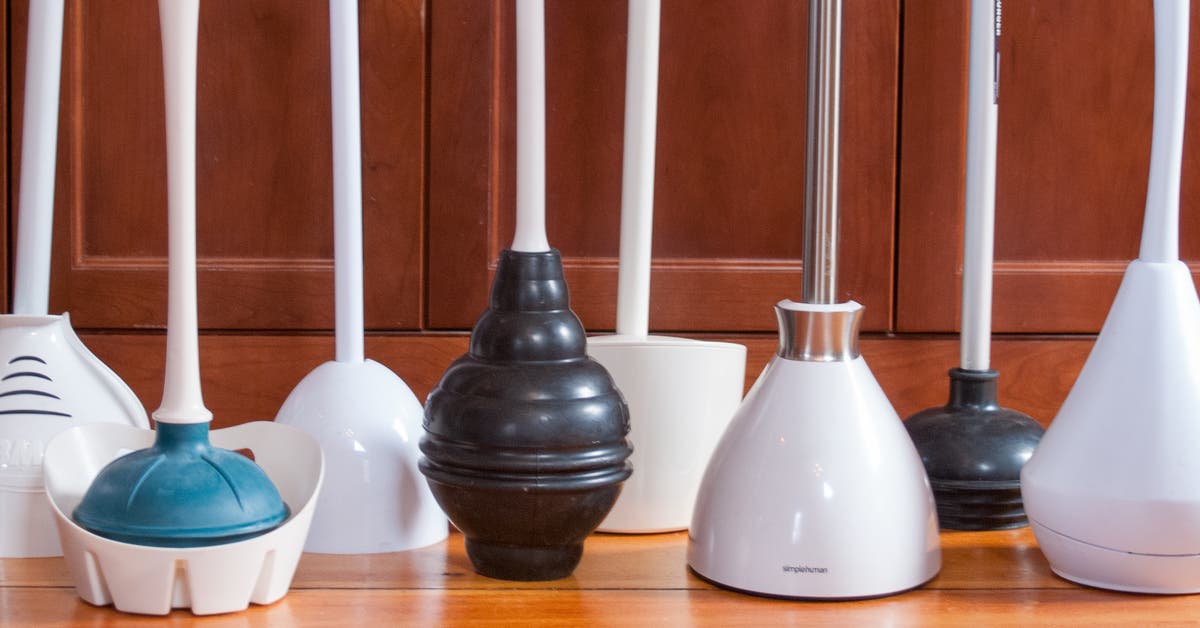
The Clorox Toilet Plunger and OXO Good Grips Toilet Plunger and Canister are very similar, with nearly identical holders. The holders each have two doors that open upward when you pull the plunger out, and doing so reveals an inner bowl with drainage holes that is set within the outer shell of the tray. The problem is that these two pieces don’t come apart, so you have no easy way to disinfect the area of the tray where the toilet water drips. In addition, we found the bulb of the OXO plunger to be so stiff that it was difficult to use, and neither plunger matched the clog-clearing power of the Korky 99-4A.
The ToiletShroom is an odd one. Its design consists of a flexible tiered cone, like a Christmas tree, stuck on the end of a handle. We liked how the long handle kept us a good distance from the action, but the plunging itself was difficult and splashy. Depending on how the outlet of the toilet is designed, the end of the ToiletShroom plunger might have to bend at a hard angle just to get in there, and we read a decent number of reviews that complained about the end of the tool breaking off in a toilet. We didn’t test this model with the foam ball, but even if it had more power than the Korky 99-4A, we still wouldn’t recommend it due to its various drawbacks.
We tested the Johnny Jolter, which works on the same principle as a bike pump, but instead of creating a focused stream of fresh air, it creates a focused stream of filthy toilet water. The shape of the tip offers no malleability, and we had trouble making a seal on the toilets we tested this model on. This plunger is fiddly to clean and difficult to store, and the unfamiliar design makes it impractical for guests.
We found the same drawbacks with the Aiment Air Drain Blaster, which uses compressed air instead of water. Pumping the handle builds up pressure in the chamber, and a trigger releases it into the toilet outlet. This model is a low-end version of the Kinetic Water Ram (one of Tim Byrne’s go-to tools for pipe blockages), but considering the success we’ve had with the Korky plunger over a seven-year period, we don’t see any reason to turn to a tool like this.
The Korky 95-4A is the same as our top pick, but it comes with a drip tray. It sounds great, but unfortunately the opening on the tray is way too small, and removing the plunger is difficult. During our testing, we constantly had to grab the drip tray and manually pull it off the plunger.
Another version of our pick, the Korky 97-3A Beehive Max Hideaway Plunger, has a telescoping handle. This is a nice idea, but the telescoping connection point is wobbly and doesn’t inspire confidence. If you have only limited clearance and want the power of the Korky 99-4A, this model is an option, but we’re very wary of its long-term durability.
The Neiko 60166A is a highly regarded plunger with a lot of positive feedback on Amazon. We found, however, that it didn’t plunge any better than the other non-Korky models. It has a tiered plunger cup, with an aluminum broomstick handle that ends in a plastic piece with a hook hole. The simple handle design made for an uncomfortable grip in our tests; we much preferred the T-handle and pommel grips that we tried.
The now-discontinued Kleen Freak Antibacterial Toilet Plunger came in a few different designs, but the plunger cup was the same on all of them. It’s a squat tiered plunger, similar to the Neiko model but not as large and with one fewer tier. It seemed to work okay in our tests, but we saw nothing that made it stand out from the pack. The drip tray that comes with this plunger is the same as the MAXClean Universal Plunger Holder Drip Tray, which we currently recommend for the Korky 99-4A.
Neither the BrassCraft Plunge-N-Store Plunger (also discontinued) nor the Libman 0598004 Premium Toilet Plunger and Caddy was as good as our picks.
As we described above, we also tested the Cobra 40030 Toilet Auger, which was basic and inexpensive though lacking the quality necessary for a long-term, reliable tool. It was recently discontinued, but if you happen to run across it somehow, it will work in a pinch.
We dismissed a number of other models without testing:
Neither of our experts likes accordion- or bellows-style plungers (such as the G.T. Water Products MP100-3 Master Plunger). Manhattan Maintenance’s Debbie Hogan told us that they have “too many hiding places for icky stuff.” Precision Plumbing & Mechanical’s Tim Byrne said, “I wouldn’t use one of those. Pretty nasty.” Reading the comments of other plumbers online, we got the sense that these plungers are powerful but difficult to use. They’re also made of a rigid plastic that can potentially mar the inside of a toilet bowl.
The PlungeMAX is another, er, interesting idea. It’s a giant bellows that you set up between the rim of the toilet and the lid. As you move the lid up and down, it pressurizes the pipes. Looking at its low Amazon ratings, we decided to pass.
But of all the plunger designs, nothing is quite as unusual and horrifying as the Pong Tu. This plunger consists of a giant sticker that you apply to the rim of the clogged toilet, creating an airtight seal. You then intentionally flood the toilet in order to get the water bulging against the underside of the sticker (we’re not making this up). The final step is to use both hands to press on the sticker as if you’re giving CPR to your toilet. This pressurizes the clog and theoretically releases it. If you don’t believe us, watch this video (or don’t watch it—you’ll be happier if you don’t).