Peak Design Pro Tall Tripod: Taller, Steadier, and More Expensive
Painstaking engineering minimizes the size. These kinds of tripods are built to be carried on difficult journeys, the kind where every cubic millimeter and ounce of weight in your backpack is precious.
The Pro Tall Tripod can extend up to 77 inches, almost 9 inches higher than the Vanguard tripod we recommend, but it packs down to just under 23 inches, more than 6 inches shorter than the Vanguard model. The Pro Tall Tripod is also 12.8 ounces lighter than our top pick, and it keeps its diameter down to a slim 3.7 inches when packed.
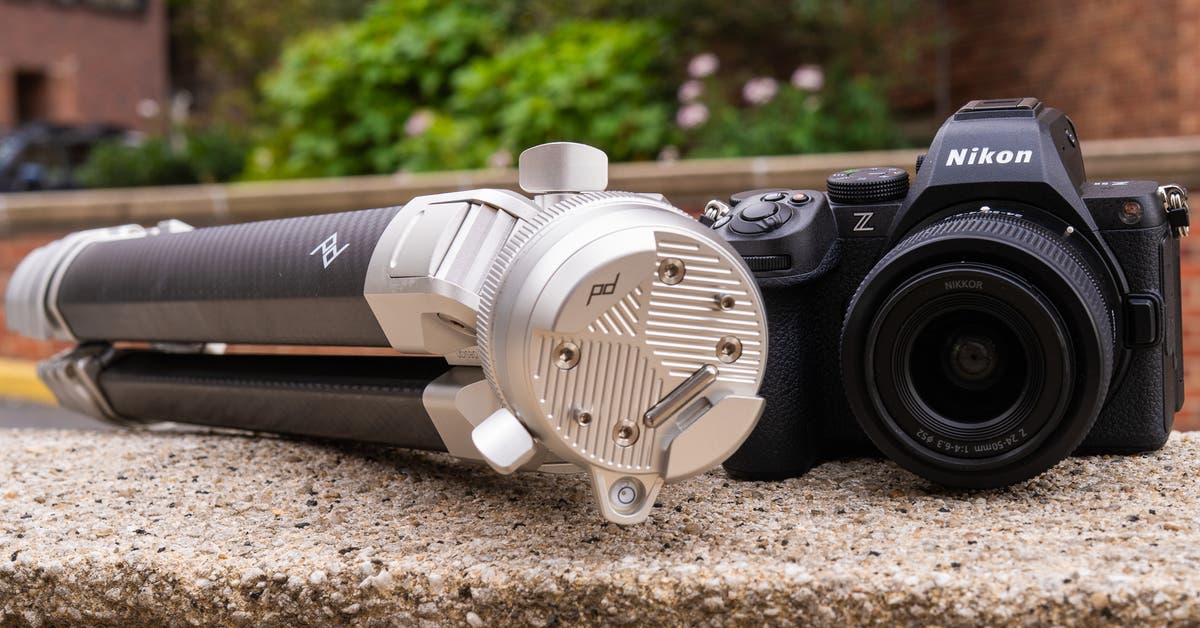
Packing down something so tall into something so small means rethinking how tripods are made. When Peak Design made its Travel Tripod in 2019, it dispensed with the tubes that most companies use for legs, opting instead for an odd hexagonal shape that causes the legs to nest more closely together around its unusually shaped center column. The Pro Tall Tripod has similar legs and shaves size off the center column by making it a concave, triangular rod; that lets the legs tuck in even tighter.
Phil Ryan/NYT Wirecutter
All of those unusual shapes require that all of the other hardware holding them together be strangely shaped as well, which makes those components more expensive to produce. Virtually nothing here is off the shelf.
It’s designed to set up smoothly and quickly. Most of the time, you can get to your shooting location a few minutes early to set up your tripod. If a leg takes a second to extend properly, you’ll be fine. But if the perfect moment you’ve planned atop Denali lasts only a few minutes, you can’t dawdle — you don’t want to have hustled up that mountain for nothing.
The legs and the center column of the Pro Tall Tripod all move smoothly, and the leg locks and the column-tightening knob work without undue effort. The legs’ flip locks have especially luxurious action, without the gritty tightness you get from less-expensive designs as you open or close them. If all flip locks were this smooth, we might recommend them over the twist locks we typically prefer.
When I took the Pro Tall Tripod to the Heather Garden in New York City’s Fort Tryon Park to (ironically) use it close to the ground making photos of flowers, I found that the sometimes-arduous macro setup process was smoother and faster than when I used my old, aluminum Manfrotto 055XProB, which also has flip locks. The leg sections on the Pro Tall Tripod also fit together with less wasted space than my aging Manfrotto model’s legs, so they glide to the needed length with less fuss.
Using the Pro Tall Tripod with the relatively large and heavy Mamiya 645 1000S medium-format film camera, I appreciated that the tripod didn’t add as much weight to the gear I had to carry in comparison with some other options, while also allowing plenty of options for setup.
The ball head is small and tucks into the legs. Like the rest of this tripod, the ball head is unique, made just for the Pro Tall model (though it still conforms to the Arca-Swiss standard for quick-release plates). With the center column stowed, the ball head snuggles between the tops of the legs but can still tilt 15 degrees in any direction. If you lift the column a little, it can do nearly anything any other ball head can do.
Phil Ryan/NYT Wirecutter
To lock it in place, you twist a ring around the head, and you don’t need to twist hard for it to hold tight. However, unlike with some other ball heads, you can’t adjust the tension of its movement. This was one of the few things that gave me pause when using the Pro Tall Tripod.
Adjusting the locking ring slowly provides some tension, but it doesn’t allow for fine adjustment. I found that frustrating when I had some macro focusing rails and a camera mounted and wanted to make small changes to the framing of my shot. Peak Design’s optional Pro Leveling Base could make such situations easier, but it adds $130 to the tripod’s already high up-front cost. Spiked feet for a more solid feel on grass or other rough terrain cost an extra $50, too.
Some extras are included. Peak Design includes a tool to adjust the hex screws that hold its Pro tripods together. This comes in handy if, over time, the leg locks loosen, or if you want to detach the tripod head from the center column for low-angle work.
It also lets you remove the two small, preinstalled screws that keep the quick-release plate from sliding off the head — useful, since they might get in the way when you’re using some kinds of plates, like my Novoflex macro focusing rails.
Finally, Peak Design tosses in one of the nicest tripod bags we’ve seen in a long time, as well as a smartphone mount that can stow in the bottom of the center column.
It’s solidly made and has a lifetime warranty. Not all carbon fiber is created equal. Peak Design uses high-quality materials in the legs, center column, and other parts of the Pro Tall Tripod. Even better, it stands behind this tripod with the same lifetime warranty that applies to all of its other non-apparel gear.