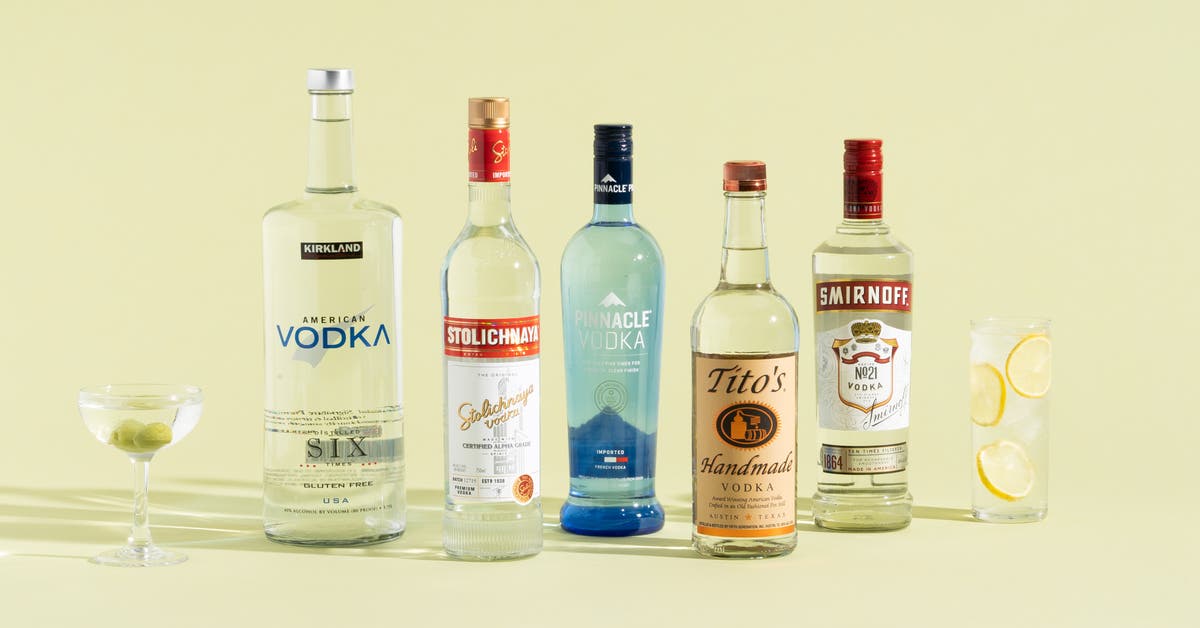
The 5 Best Vodkas of 2025
There’s no good way to know whether you’ll love a vodka before you try it, since you can’t realistically judge a bottle’s quality based solely on its price, base material, or labeling. And unfortunately, most buzzwords found on labels are purely marketing devices that don’t signify quality.
For example, many brands advertise the number of times their vodka has been distilled. Yet the distillers we interviewed, as well as other published works we referenced, all corroborated that the stated number of distillations on a bottle is inaccurate and uninformative. A higher or lower number of distillations does not correlate to a higher or lower quality. That’s because that number doesn’t account for all of the other variables in the distilling process that can differ from one distillery to another—variables such as included additives, the quality of the feedstock, or the type of stills used.
We also learned—in our research as well as firsthand—that there’s no appreciable difference between top- and bottom-shelf vodkas, aside from packaging. Whereas other spirits, such as whiskey, might cost more because of factors like age, volume loss, scarcity, or source materials, neutral vodka is theoretically inexpensive, unfussy, and quick to produce.
This isn’t to say that vodka can’t use an expensive base material or that it can’t express terroir or character from its raw ingredients. Most people think of vodka as coming from raw materials like potatoes and grain, but it can be produced from nearly any edible ingredient under the sun, such as milk, fruit, rice, and even air. Someone with an expert palate may be able to appreciate the subtle characteristics that come from different base ingredients. But materials alone won’t indicate quality—there are too many other factors in production that influence the texture, flavor, and smoothness of the final product.