The Best Lockbox | Reviews by Wirecutter
Despite their limited market, lockboxes come in a bewildering variety of forms and are sold under multiple brand names. To cut through the tangle, we first spoke with locksmiths and realtors for advice. Our conversations revealed a consensus: The most secure lockboxes are wall-mounted models made of solid metal and attached by concealed screws. A determined thief with a crowbar or sledgehammer might consider breaking into one, but actually doing so would cause a scene and draw too much attention—and quash any burglar’s grand plan.
These wall-mount boxes make a mockery of the alternative: shackle-style boxes with a U-loop that goes over a doorknob or gate for convenience. We categorically reject these for use on homes and rental units. As one locksmith explained, a quick snip with bolt cutters will get through the loop on most models. Then the perp can take the box away and use all of his faculties to break in without worrying about onlookers.
Our locksmiths then helped us decide between locking mechanisms. There are three common types: wheels, which employ tumblers marked with numbers or letters; push buttons, on which you punch in a numerical code payphone-style; and dials, on which you enter the combination with a rotating dial, like on a classic school padlock.
Wheel models dropped out of consideration almost immediately: Our locksmiths emphasized how easy it is to insert a thin metal shim between the tumblers and work out the combination by feel.
Push-button boxes are simple to operate—kids can do it, which is a real selling point—but they have a significant drawback: The numbers can be pressed in any sequence (so if your combo is 3-2-1, you can also open it by pressing 2-1-3, or 1-2-3). That dramatically reduces the effective number of possible combinations, which in turn reduces security. Plus, when trying to crack push-button locks, burglars (and locksmiths) first simply look for the extra wear-and-tear on the combo’s numbers. To avoid that vulnerability, you have to change the combination with some regularity. That can be confusing for infrequent users and kids. And be honest: How high is changing the combo going to be on your list of chores? The simplicity of push-button locks is attractive, but it’s also a bit of a liability.
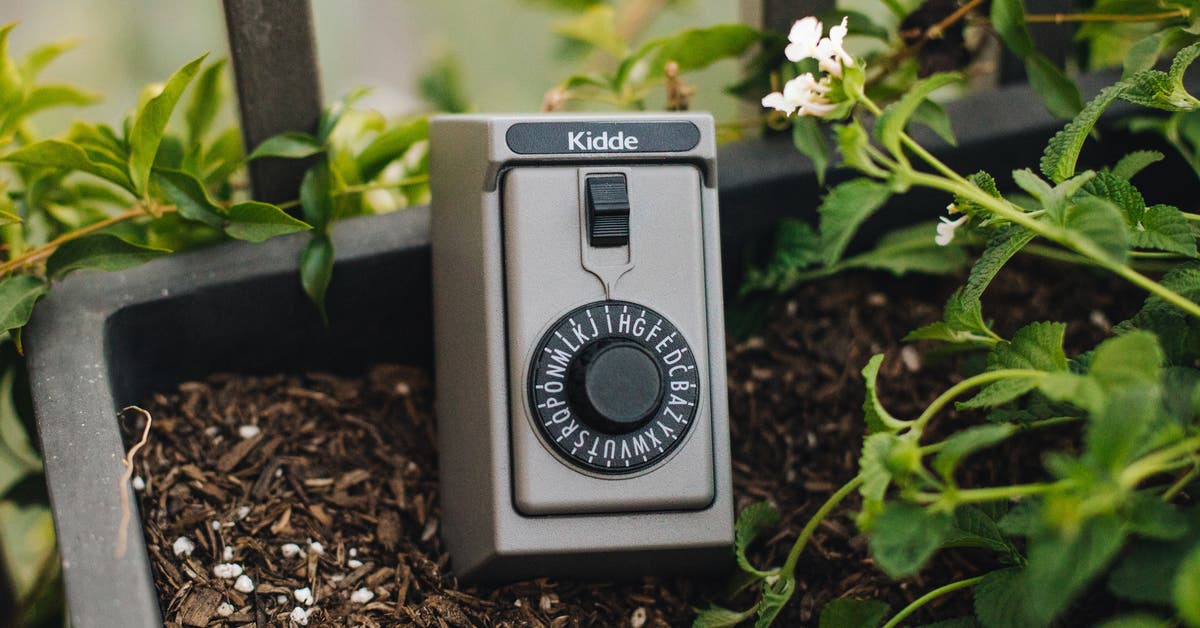
So that leaves combination dial locks. The locksmiths we spoke with all agreed that these are by far the trickiest to crack, even for professionals working in the privacy of their workrooms. Few thieves would waste time and risk arrest trying to crack them in full public view. And, again, bashing one open by force would draw immediate unwanted attention. Dial-operated wall-mounted lockboxes, in short, deter thieves the best. But here’s the problem: It turns out that almost nobody makes them. We’ve found only one priced for regular consumers (it’s our pick).
Besides Master Lock and Kidde, only tiny companies like Vault Locks and ShurLok produce affordable lockboxes, and most of theirs are wheel-style models—no good.
Another name kept popping up in our discussions with experts, though: Supra. This company caters to the real estate and security industries, and our experts said its boxes are unequivocally the best available, with ultra-sturdy construction and advanced features like remotely programmable passcode changes. Unfortunately, it proved impossible to find a Supra dealer who would install a unit on a private residence, and even if we’d found one, the boxes start at around $400—far too much to be practical.
We learned, though, that Kidde’s AccessPoint line is the consumer version of the Supra boxes, and that Kidde produces professional-grade lock systems for firefighters and construction companies, as well. That pushed several of its models into the short list of finalists that we called in for review.
We also called in several high-selling Master Lock push-button key boxes, along with (for the sake of completeness) a wheel-dial model from WordLock. Then, we asked the professionals to defeat them.