The Best Wall Ovens | Reviews by Wirecutter
While any oven will bake or roast your food, there are differences in how well they’ll perform and how convenient they are to use, not to mention how they’ll look. Based on my extensive experience, as well as my conversations with experts and my comparisons of more than 25 single-oven models (as well as their double-oven and combo-oven variants), I think that these are the most important features to look for in a wall oven:
Cooking features
An oven capacity of 5 cubic feet is big enough to accommodate a huge Thanksgiving bird or a half-sheet pan or large cookie sheet, so you don’t need much more space than that. (None of the wall ovens we looked at are large enough to hold a caterer’s full-sheet pan.)
Most wall ovens have an optional convection cooking mode, which uses a fan and usually an additional heating element to speed up cooking and help your food come out crispy on the outside and juicy on the inside. Most have a feature that can automatically convert the temperature for a non-convection recipe to one that will work best with the convection fan turned on.
Most wall ovens come with at least two racks, but many models have three. That’s particularly handy for baking cookies or during the holidays, when you’re trying to cram as many dishes into the oven as you can.
Some ovens also have one or more gliding racks on rollers, which are easier to slide out than typical wire racks. This can come in handy when you need to stir a pan of vegetables midroast or take a temperature reading on a chicken, for example.
We think that a high-heat (aka pyrolytic) self-cleaning mode is an essential feature for a wall oven, as they are expensive. While several repair technicians have told us that an oven or range’s electronic components can be damaged by high-heat cleaning cycles, we’re not aware of widespread complaints about this from wall-oven owners. If you’re worried about damaging your oven with a high-heat cleaning mode, just don’t use it. But there is simply no easier way to clean a very dirty oven. Ideally, it’s better to clean your oven more frequently to prevent baked-on stains. Some ovens have a steam-based cleaning feature, but I can tell you from personal experience — having tested several ovens with this feature — that it’s not a replacement for a high-heat mode, and it often leaves you with a whole lot of water to wipe up. Racks that can be left in the oven during the self-cleaning cycle are also a big plus in our book.
Design and aesthetics
A wall oven is often installed at eye level, so the aesthetics are particularly important, and I took the overall look into account.
Stainless steel is essentially a neutral color in a modern kitchen, and every wall oven I looked at is available in this finish. However, I gave a slight preference to models that came in more than one finish because they give you increased flexibility in your kitchen design.
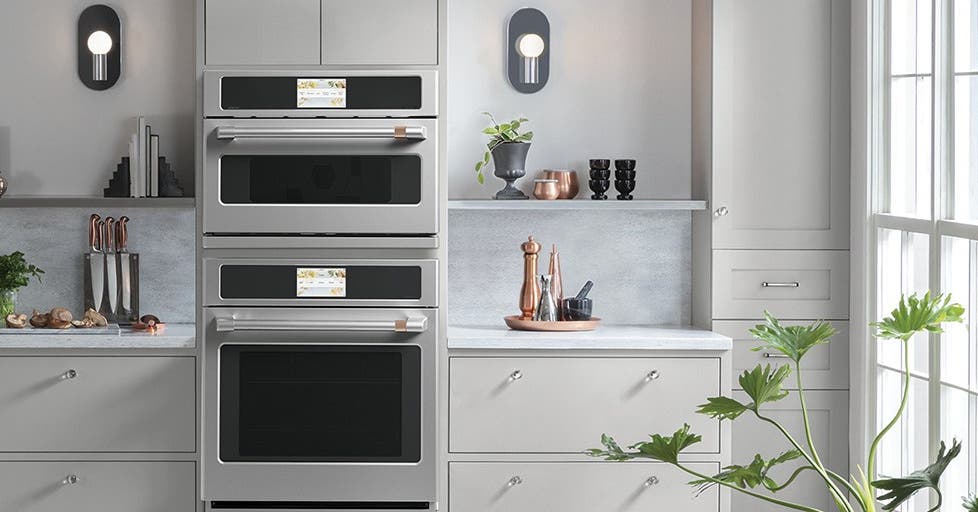
Round, commercial-style towel-bar handles (rather than curved handles) tend to be popular, and they are a defining feature of many upscale models.
And I noted where ovens can be installed flush with the surrounding cabinetry to give the kitchen a sleeker look. If you are remodeling and aiming for a high-end aesthetic, a flush fit is a good feature to consider.
I also put each oven’s controls through their paces to see how intuitive they were. Most wall ovens come with digital control panels. Some also have color screens that keep the oven looking sleek and help enable high-end features like automatic or assisted cooking modes, which can be useful if you’re willing to embrace them. Knobs aren’t as common as you might expect — they’re usually found on higher-end, pro-style models. Some people prefer knobs because they believe knobs make it easier to select the oven settings than digital controls do.
Finally, I checked for oven doors that opened smoothly and didn’t close with a bang.
Reliability and customer service
Reliability and customer service are difficult to pin down. I took into account some reliability data from J.D. Power and Yale Appliance, although neither source is comprehensive.
Over my years of reporting on appliances, I’ve also gathered feedback from repair technicians about the brands they think are the most reliable. While this feedback was highly anecdotal, it was quite consistent when it came to wall ovens.
In addition, I pored over owner reviews to be sure they didn’t reveal any clear, consistent pattern of widespread defects, design problems, or egregiously bad product support.
Less-important features
Almost every wall oven comes with a temperature probe. In theory this is useful, but to my knowledge, not many people actually use it. A broiling pan is another helpful extra, but these days they tend to come only with high-end ovens. Since they’re either rare or rarely used, I didn’t consider these accessories essential.
Extra cooking modes like delayed start, timed cooking, preset cooking programs for specific foods, and Sabbath mode are pretty much standard in every oven. I don’t get the impression that people use them very much, so I didn’t give them a lot of weight. However, some ovens are beginning to include assisted or semi-automated cooking programs that provide step-by-step directions and, in some cases, photographs of the way your food should look when it’s done. An experienced cook might scoff, but I have plenty of experience myself, and I still appreciate when an oven can give me recommendations on things like the right pan to use, rack position, and cooking time (depending on just how rare or well done I want my roast beef or salmon).
Wi-Fi connectivity is increasingly popular, usually as a way to preheat the oven with your phone or a voice command, or sometimes (more helpfully) for diagnosing problems through an app, so a repair technician will know what’s wrong with an appliance before they arrive to try to fix it.