EZ Outlet Electrical Outlet Extender: A Solution for Hidden Outlets
In some cases, I found that the EZ Outlet just isn’t long enough. It’s 22 inches at its shortest, which is plenty of reach for it to come up behind a nightstand. It can slide out as far as 34 inches, which typically should be enough to reach out from behind a dresser.
But with my furniture and my outlet positioning, it just wasn’t long enough to free up the outlets behind my couch or my bed, at least not while running horizontally along the wall. If you need more length, you’re better off with a more traditional indoor extension cord, which can extend to 6 to 10 feet, usually, or longer in some cases.
Then there’s the look. I find it inoffensive, which is all I ask for in an extension cord. Others aren’t so forgiving.
“That thing is hideous,” said Joshua Lyon, who covers home decor for Wirecutter.
He prefers the cloth-wrapped look of the interior extension cord that we recommend, and (unlike me) he isn’t bothered by having a long cord and sockets on the floor under his couch.
Joshua also points out that you can always secure parts of a regular cord to your walls with your own Velcro strips or gaffer tape, or you can hide the sockets inside something like this decorative box that he saw on Etsy but hasn’t personally tested.
Top pick
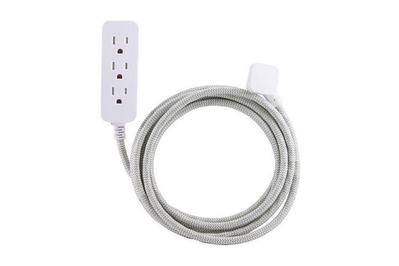
The Cordinate indoor cord has a sleek look and a flat plug that won’t get bent or pulled from an outlet. It’s 10 feet long, and we love that it’s available in a multitude of colors, especially neutrals.
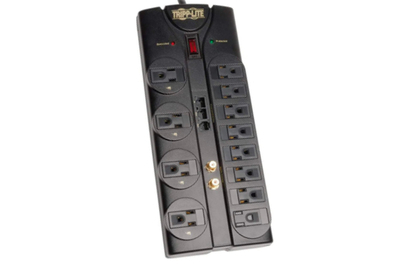
With 12 outlets, an 8-foot cord, and a flat plug, this power strip can handle busy entertainment centers, with room to spare. In our tests, it was also one of the best at absorbing power surges.
The EZ Outlet has enough sockets for a typical nightstand’s worth of stuff, but if you need to plug in more gear, you’re better off with a power strip, like one of the surge protectors we recommend.
This extender is also on the expensive side for any extension cord, let alone such a small one. However, the cheaper, outlet-shaped knockoffs on Amazon don’t seem to have a safety certification.
Considering the price, I doubt I’ll end up buying an EZ Outlet for every barricaded outlet in my house. But it did solve one of my biggest pet peeves — the ever-changing tangle of cords and cables around my daughter’s nightstand— and for that, I am grateful. Now that I have it set up, reaching out from behind her heavy, wall-anchored clothes dresser, I can’t imagine moving it.
This article was edited by Megan Beauchamp and Ben Frumin.