The 4 Best Soda Makers of 2025

Top pick

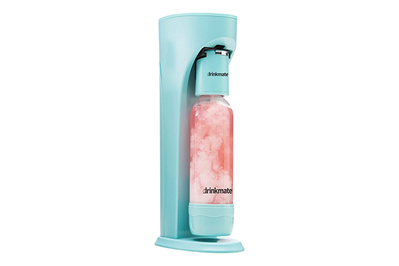
The Drinkmate OmniFizz produces consistently delightful carbonated beverages that you can easily ramp up (or down) to your taste level, creating anything from a subtle fizz to big, tumbling bubbles. The OmniFizz also carbonates nonwater beverages just as well as it carbonates water, handling the task better than any other soda maker with similar capabilities. By contrast, our other picks can carbonate only water.
We carbonated sugary apple juice and dry white wine in the OmniFizz to delightful results and with minimal leakage. Every other soda maker we tested that advertised itself as capable of carbonating nonwater liquids leaked, spewed, and spat considerably. And if you carbonate anything other than water in a SodaStream model, you void the warranty and risk damaging the machine—and making a big mess.
Note that some frothing when carbonating nonwater liquids is unavoidable, even in the OmniFizz. To minimize spillage, fill the bottle only halfway when carbonating anything particularly viscous, rich, or sugary—or when carbonating any nonwater liquid for the first time, as it can take some practice to know how much a liquid will froth. Wait between button pushes for the froth to settle down, and let the bottle sit in the machine for a few minutes before tilting it forward and removing it from the soda maker. Once you remove the bottle, a mechanism in the cap allows you to release pressure gradually so that your drink doesn’t foam over. But just in case, we also recommend holding the bottle over a sink.
The Drinkmate OmniFizz is essentially the same machine as the Soda Sense Sensei. (Soda Sense, a CO2 cylinder retailer, sells the Sensei through a partnership with Drinkmate.) The machines differ in color—the Sensei comes only in gray—and the Sensei has one unique feature, an unnecessary and difficult-to-clean metal grate on its base, whereas the OmniFizz has a smooth, continuous plastic divot. If you don’t care about the color of your soda maker, we recommend checking the price for both models on Amazon, as well as on each company’s own website, and choosing whichever one is cheaper at the time. Both typically cost around $140 when bundled with one CO2 cylinder—though we have noticed frequent sales, especially on each company’s website, which can bring the price down to about $100.
You can use the OmniFizz with any screw-in 60-liter CO2 cylinder, including the SodaStream cylinders available in many big-box stores; if you go with SodaStream cylinders, just be sure to get the type with the blue label, not the pink Quick Connect version. Drinkmate and Soda Sense both offer cylinder-exchange programs by mail. Drinkmate’s system is coupon-based: Mail in your empties and receive coupons—$22 to $55 off depending on how many cylinders you send in—by email for use on your next cylinder purchase. The process is a little annoying, because if you don’t remember to apply the coupons, you pay full price, at two cylinders for $60. Soda Sense’s system is more automated: Once you mail in your empty cylinders, Soda Sense initiates an order for the same number of new cylinders for $21 each. Neither Drinkmate nor Soda Sense currently offers in-person exchange options.
The Drinkmate OmniFizz comes with a two-year warranty, which is decent coverage.
Flaws but not dealbreakers
Unlike the other soda makers we tested, which contain a fixed carbonation nozzle on the machine itself, the OmniFizz carbonates through a nozzle on a separate cap that you screw onto the bottle first and then lock into the machine. Sliding this cap in and out of the machine requires precision and aim, and we needed a few tries to insert it properly. (The silver flap on the cap of the bottle should be facing you as you slide the bottle into the machine.) However, the unique cap is also what enables this machine to carbonate nonwater liquids effectively, since it allows you to carefully release the pressure after carbonating, preventing your drink from frothing over. As with most of the machines we tested, screwing the CO2 cylinder into the back of the machine is tedious, and the slick plastic sides of the OmniFizz don’t give you much purchase for doing so.
How the OmniFizz has held up
After using the OmniFizz regularly for a year, with around eight months of near daily usage, I’ve found that the machine is still working great and making me the highly carbonated seltzer I crave. Despite my initial clumsiness at inserting the bottle correctly, the motion has become second nature, a task I can perform mindlessly before sitting down to a meal.
As the Drinkmate manual suggests, I’ve figured out what to look and listen for when pushing the carbonation button to get exactly the fizz levels I want. The OmniFizz makes a hissing sound when the water has taken on as much gas as it can (meaning, any more pushes are just wasting CO2), and I’ve noticed that it emits a higher-pitched noise just before it makes that hissing sound. By listening for that high-pitched noise, I’ve gotten good at taking it right up to that level. Then I remove the bottle, release the pressure, and am rewarded with crackly, zippy seltzer. Leaving the bottle in the fridge filled with water between uses has also become second nature, so I’m always one step closer to some bubbly.
In the past year I’ve carbonated nonalcoholic aperitifs, various juices, lemon water and lemonade, iced tea, and, on one particularly desperate day stuck at home with a cold and no fun beverages, Gatorade. I have yet to find a beverage I would want to carbonate that the OmniFizz can’t handle.
Finally, I’ve been exchanging cylinders through Drinkmate’s website for around eight months. The process is easy for me—I save the boxes the cylinders come in, put the empties back in there with the provided shipping label, and deposit them around the corner at a UPS drop-off location. Then I buy my next cylinders with the coupon that Drinkmate sends once it receives my empty cylinders. I use about a cylinder a month.