The 5 Best Nursing Bras of 2026
Bras designed specifically for nursing provide easier access for feeding than regular bras do, and they support breasts through size fluctuations, heaviness, and leakage. Though you may use nursing bras for a couple of years at most, you’ll likely rely on these garments daily during that time, so it’s worth getting something that’s comfortable and fits correctly.
Unlike regular bras, most nursing bras are equipped with clasps where the cup meets the strap that make it easy to access your breasts without having to remove your bra. Or, some nursing bras simply allow you to pull the cups aside for breast access. Many nursing bras also have multiple rows of hooks and super-stretchy fabrics that can accommodate rib cage expansion and contraction and weight gain and loss.
For your first nursing bra, we suggest sticking with a sleep bra or one sized S to XL+, which will cover a large range of band and cup sizes. These tend to be softer, stretchier, and more forgiving than most bras sized to a given band and cup.
On average, milk comes in more abundantly at approximately day three or day four after giving birth. “This can cause a significant increase in breast or chest size,” said Tiffany Carter Skillings, a midwife and IBCLC (International Board Certified Lactation Consultant). “We’re talking sometimes up to two cup sizes larger.” Plus, she added, “[Sleep bras] are soft, and since they don’t provide a lot of structure they are less likely to cause plugged ducts and mastitis.” (Don’t make the mistake of getting a much larger bra when your milk comes in. Your breasts will decrease in the weeks that follow once your milk supply stabilizes.)
After a couple of weeks, you can expect smaller fluctuations in breast size throughout the day. A more flexible, wire-free bra can deliver comfort, support, and even some level of feeling put together, if that’s important to you. Three bras is a good number to have while you’re still breastfeeding, as milk will undoubtedly end up on them, and they’ll need to be washed frequently. Many nursing bra guides try to match activities with specific bras designed particularly for things like sleep, T-shirts, work, et cetera. However, we found that many companies now design bras meant to adapt for whatever life throws at you, eliminating the need for a different bra for “day” or “night.”
Still, it’s helpful to know about the different types of nursing bras out there. We found that there are five main types, though there is overlap across the categories:
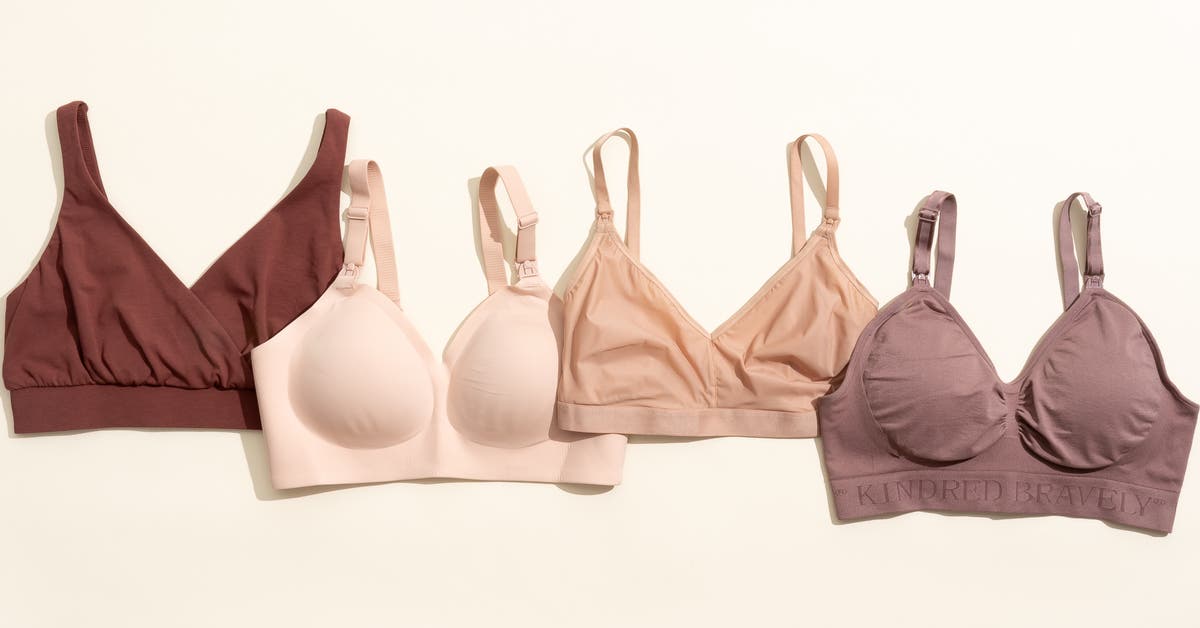
Seamless: These bras tend to be soft and sleep-friendly and are generally made with material that stretches to accommodate breast size fluctuation (and sized S–XL, instead of by cup size). They generally provide more support than bras made specifically for sleeping, but not as much as underwire bras. Many come with removable cups for masking nipples, have hook-and-eye-closures for ensuring a snug fit, and have clasps where the band meets the strap for easy nursing access.
Wireless: Wireless bras are sometimes sized by band and cup, and they are often structured with seams, much like a traditional underwire bra. In place of an underwire, these bras offer support through fabric, shaping, and seams, offering lift and padding without as much potential for clogged ducts (as long as they’re not too tight). These bras also have clasps at the straps, and many have extra hook-and-eye closures. (You can also find wireless, seamless nursing bras, combining all of the above features for maximum comfort and a smooth fit.)
Underwire: Sized by band and cup, underwire nursing bras are similar to regular underwire bras except that they have clasps where the cup meets the strap and may have more hook-and-eye points of attachment. The best underwire nursing bras have wires that curve in more gently toward the armpit compared with traditional underwire bras, as well as a flexible wire to allow for the size fluctuations that accompany nursing.
“While many women prefer non-wire, the benefits of a wire can be more support and less bra underneath the breasts,” said Amie Heenan, owner of Melmira Bra & Swimwear Boutique and an expert bra fitter. “Women often find they are, in fact, more comfortable.” When it comes to underwire bras, it is especially recommended to get fitted (or find a brand that has generous return windows) since overly tight clothing is a potential cause of clogged ducts, according to the World Health Organization. Heenan often suggests that a customer try both wired and underwire options. If she chooses an underwire “we feel it is important to invest in a good-quality designer, with a wire that is lined, coated, and flexible, as she can change not only with time but throughout the day.”
Pull-aside (sleep): Also known as “crossover” or sleep bras, these simple, hardware-free bras are very easy to pull aside and nurse in and are the most comfortable for sleeping. Though the primary function of these bras is to give you support at night — they hold pads for collecting leaky milk and make nursing incredibly easy because you simply pull the cup over to expose the breast — of course you can use them during the day as well if you’re not concerned about wearing a bra that provides lift or shape. Crossover bras are typically pulled on over your head.
Although we did a little research on nursing sports bras, we didn’t include them in this guide, which is focused on everyday nursing bras. And if it’s a pumping bra you’re looking for, head to our guide to the best pumping bra and other tools to help make pumping breast milk less of a chore.