The Best Boxed Macaroni and Cheese of 2025
Shelf-stable mac and cheese has evolved considerably since the early days of tubular pasta and powdered cheese. The iconic pairing that we now associate with school-night dinners was invented by Kraft in 1937, and it was an immediate hit as an affordable meal during World War II rationing. Its continued popularity cemented its place as a post-war American pantry staple.
Over time, notable innovations included the Kraft Deluxe of the 1960s, which used a prepared cheese sauce in lieu of powder, and the release of a new shape in 1975: spirals. From there, macaroni and cheese creativity snowballed, with pasta in the shape of astronauts, footballs, and cartoon characters. Perhaps most notable was the introduction of Annie’s Shells and White Cheddar in 1989, ushering in what would become a new combination to rival elbows and orange cheese.
These days, you can find macaroni and cheese in every shape and flavor, but for this round of testing, we stuck with the following criteria:
Boxed: We restricted our test to boxed mac and cheese, which is shelf-stable and more widely available than the frozen and microwaveable-cup variety.
Cheese powder: Though some boxes now come with a premade packet of cheese sauce, we only tested those that use cheese powder. Powdered mixes are more common across brands and afford a bit more control over the consistency and flavor of the final sauce, since you can tailor the type and amount of milk and butter that you add.
Cheddar elbows and white-cheddar shells: Despite our morbid curiosity to try the more out-there flavors (yes, Cheetos makes mac and cheese, and Guinness does, too), and though cartoon shapes are fan favorites, we decided to stick to the classics: elbows and (orange) cheddar, and shells and white cheddar.
Elbows versus shells is one of the great debates of modernity. We found that among our youth testers, older kids (ages 10 and up) preferred shells, whereas the younger kids (ages 5 to 10) leaned towards elbows.
According to our testing notes, younger kids seemed to prefer the softer texture and milder, sweeter flavor of elbows. In fact, in that age group, “nice and soft” was a dominant refrain about elbows against the “too hard” comments about shells.
White-cheddar shells tend to be saltier and sharper and have more bite, which may suit the more seasoned palate of older kids. Put more simply, as one teen did: “Shells are epic.”
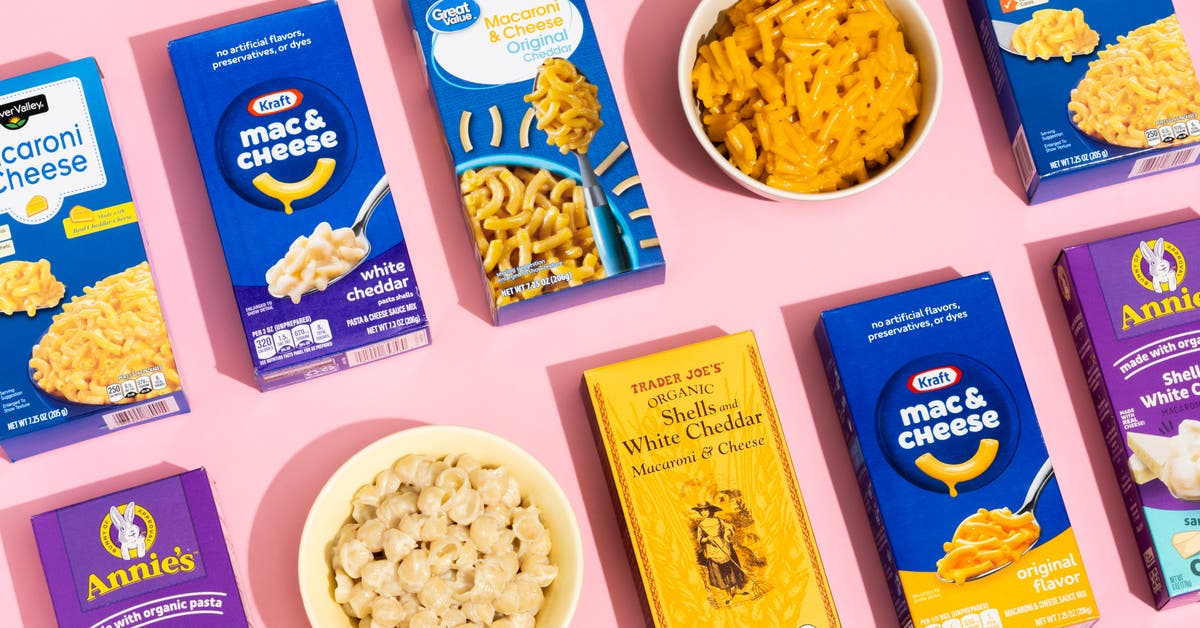
We settled on testing 19 boxes of mac and cheese, which consisted of 11 boxes of elbows and cheddar and eight boxes of white-cheddar shells.
To test the macaroni and cheese, we followed the instructions on the box. We used Kerrygold butter, the top pick from our butter guide. When milk and butter types were unspecified, we used whole milk and salted butter. When the instructions only called for “low-fat” milk, we interpreted that as 2%. For boxes where adding butter was optional, we added the minimum optional amount, so no mac and cheese was at a disadvantage.
Six members of the kitchen team sat for a brand-concealed taste test over the course of two days, with one day dedicated to elbows and another to shells. We served the mac and cheese in small groupings so that each contender was sampled hot and fresh off the stove.
We also solicited feedback from some of the most discerning, opinionated, and knowledgeable experts in this field: kids. We invited 20 children of Wirecutter employees, ranging in age from 5 to 13, to taste mac and cheese from Kraft, Annie’s, and Good & Gather in a concealed taste test.
The kids used three stickers to rate their picks: a green smiley face, a yellow “meh” face, and a red frowny face. We tallied these colors into a chart to get a sense of the kids’ rankings and asked each kid to explain what they liked or disliked, as well as their general preferences for mac and cheese.