These Silicone Scar Sheets Helped Me Find Peace Post-Surgery
I’m no stranger to scars. I have several from previous surgeries; such is life as a spoonie, or someone with chronic illness or pain.
But last year, I spent nearly 10 months in a medical intensive care unit and five months on extracorporeal membrane oxygenation (ECMO) life support. My lungs and heart were failing. A tracheostomy tube in my neck connected me to oxygen support, and the Velcro collar that held it in place clawed at my throat, dotting it with puncture wounds. Meanwhile, the ECMO’s large tube sewn into my right internal jugular vein aggressively tugged at my raw skin. Twice I was awoken in the middle of the night by blood streaming across my face and pooling beneath my chest.
Thanks to a lifesaving double lung transplant from an organ donor, I made it out alive. Still, for months when I looked into a mirror, I saw more than my face. I saw fear. I saw pain. I saw reminders of the most traumatic experience of my adult life.
“Our skin has a tremendous ability to heal itself from different types of trauma, but there are limits to how well we can heal,” said Chris G. Adigun, a dermatologist and owner of Dermatology & Laser Center of Chapel Hill in North Carolina, in a phone interview. And facial- or trauma-based scars like mine are linked to higher reported rates of anxiety and depression and PTSD.
I reached out to my dermatologist, prepared to lay down some cash if it meant my anxiety would be eased. But she threw me a curve ball when she suggested I buy ScarAway Silicone Scar Sheets, which are widely available at drugstores. They made a huge difference for me, but note that none of what I’m about to say is medical advice, and you should consult your doctor before starting any treatment.
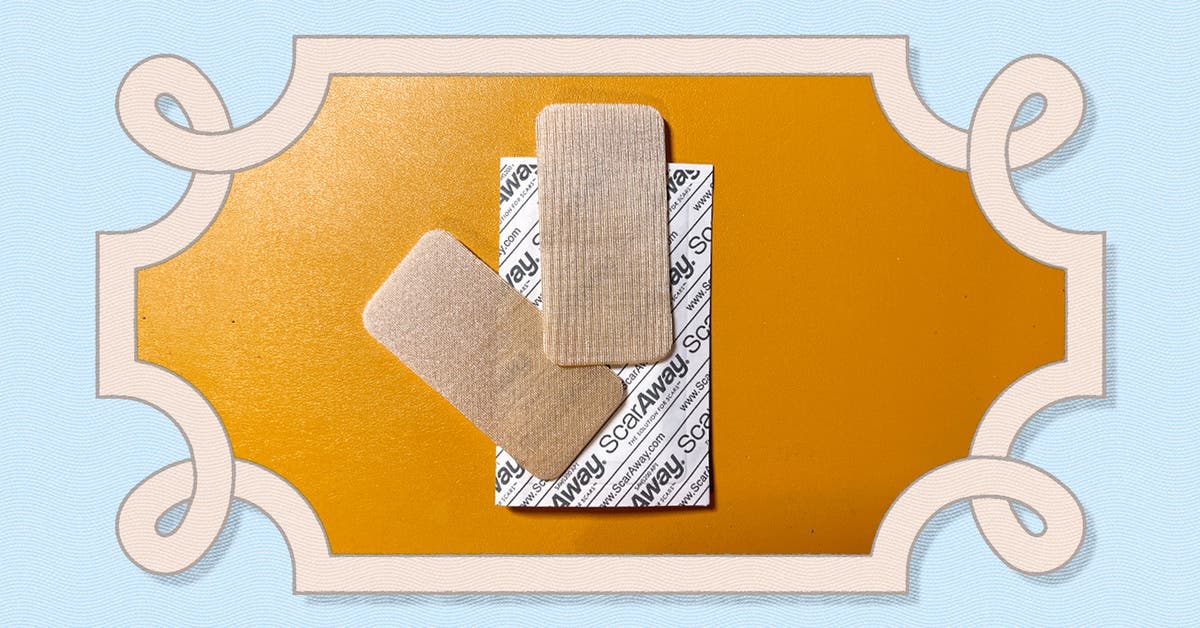
These thick, tan-colored silicone sheets maintain their grip for over a week — but you need to wash them daily.
ScarAway sheets are medical-grade silicone sheets, an affordable and noninvasive treatment. (Similar sheets are sold by a number of manufacturers, but I’ve only had experience with ScarAway sheets, since they were what my dermatologist recommended.) These sheets mimic the natural barrier of healthy skin, helping many types of scars to heal.
Through hydration, silicone sheets suppress keratinocyte activity, which is an overactive healing response that can lead to raised, red scars, says Adigun. By locking in moisture, these 24/7 sheets can help fade and soften many kinds of scars and reduce redness and discomfort.
The opaque sheets also “can double as UV protection,” said Adigun. “The most important thing [you] can do initially with scarring is sun protection because UV exposure worsens the appearance of scars.” Sun exposure also delays the healing process.
I began using the silicone sheets two weeks after a repair and revision at my tracheostomy site and several months after the trach was removed. After two weeks of steady use, I noticed that my surgical site had healed further, and the scar was less red. A month later, redness was further reduced, and my scars appeared smoother. But ScarAway sheets weren’t miracle workers; they didn’t help with hypertrophic scars or keloids, uses listed by Alliance Pharmaceuticals, ScarAway’s manufacturer.
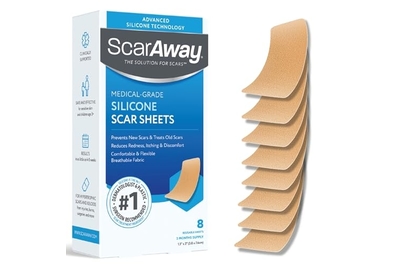
ScarAway’s silicone sheets are water-resistant, and each one can be used up to 10 days before it needs to be replaced. The packaging says to wear the sheets up to 23 hours a day, so I chose to remove them each night to shower and reapplied the used sheets on clean, dry skin. While other manufacturers sell rolls or sheeting that can be cut to size, ScarAway’s self-adhesive sheets come in a range of precut sizes: 1.5-by-7-inch strips for C-section scars; 1.5-by-3-inch sheets, which I found easy to use; 1.5-by-3-inch clear sheets; and a variety pack. Each box costs about $25.
The ScarAway original sheets are reusable, but they require routine cleaning to maintain their strong grip and seal. Wash the sheets with non-moisturizing soap and let them air-dry before reapplying.
There are some other features to keep in mind. For one, ScarAway’s Silicone Scar Sheets come in only one tan color, so they may be more noticeable on some skin tones. They’re also padded, so they aren’t ideal for scars along the skin’s most mobile areas, like the elbow.
For an alternative that addresses some of these drawbacks, ScarAway also makes a thinner, clear bandage, the ScarAway Clear Silicone Scar Sheets. These sheets are also water-resistant but, being thinner, are easier to cut to size. They’re also a little more hands-off to use, maintaining their hold for up to 10 days without needing to be cleaned. But in my experience, they were barely effective at reducing hyperpigmentation.
That’s not surprising, said Tanya Greywal, the director of Laser & Cosmetic Dermatology at the University of Washington Medical Center, in a phone interview. “[A silicone sheet] is not going to solve every type of scar. If you already have [a thickened scar] it may help to some degree, but you may not see such drastic results.”
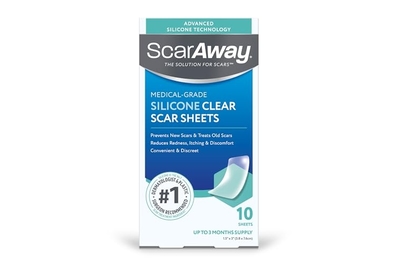
These clear sheets are thinner and less noticeable than the original tan-colored, padded sheets.
You may also experience itching while using silicone sheets. At first, my neck itched like crazy. Within a few days I realized what the itching meant: My skin was healing!
Your results may vary, of course. And even with proper wound care, scars may take a long time to heal. Redness, for example, can easily last a year — or even 10 years for hypertrophic scars — according to Thomas A. Mustoe, author of Textbook on Scar Management: State of the Art Management and Emerging Technologies and a plastic surgeon and clinical assistant professor at Northwestern University’s Feinberg School of Medicine.
No matter the type of scar, silicone gel sheets (from any maker) are most effective the sooner you use them after surgery, said Adigun. Some studies have shown that early use — as soon as 48 hours after surgery — can prevent hypertrophic scars and keloids from forming at all. But in general, they shouldn’t be applied to open wounds. As always, you should consult with a medical professional for guidance.
“You first have to wait for the skin to heal completely. After that you can start to use some of these products,” said Greywal, who’s also the director of the Severe Acne and Scar Specialty Clinic at UW Medical Center’s Roosevelt Dermatology Center and Eastside Specialty Center.
As long as you don’t expect celebrity-level plastic surgery results, you may appreciate the payoff of silicone sheets like ones from ScarAway. With a little patience, trust, and proper sun protection, they helped me heal a tiny piece of my trauma and regain some peace of mind.
Now — nearly a year after emerging from the hospital — when I look in the mirror, I see a fighter.
This article was edited by Katie Okamoto and Catherine Kast.