We Uncovered Many Smoke Alarms on Amazon That Don’t Meet Basic Safety Standards
Top pick
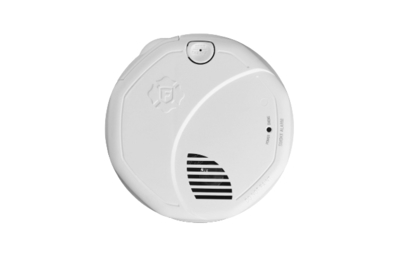
This smoke alarm has been ETL-certified to meet the current UL fire-safety requirements. We love the wireless interconnection feature and the voice-based warning system.
That stamp of approval means that a smoke alarm has been certified by an accredited testing lab — typically either UL itself or Intertek, the lab behind the ETL Mark — to detect several types of fires about as quickly as current technology allows, with a reasonably low likelihood of a false alarm, and that it will alert you to the fire with a sufficiently loud and recognizable warning. Unlabeled alarms, in contrast, might work fine, but without an independent evaluation to lean on, there’s no way to know for sure.
Butch Browning, executive director of the National Association of State Fire Marshals and a retired Louisiana state fire marshal, characterized it as “very irresponsible” to knowingly install a smoke alarm that hasn’t been certified for safety. “It’s extreme negligence,” he said.
It’s easy to spot a certified smoke alarm when you’re shopping at a brick-and-mortar outlet: It’ll say so on the packaging, usually with a logo from UL or ETL or phrasing like “conforms to UL 217.” The compliance label will also be printed on the alarm itself. Fire inspectors look for these badges when they’re in the field, so an unlabeled alarm is essentially noncompliant. “People just need to be able to pull down that alarm and look for that certification,” Browning said.
Online, it’s tougher to verify whether a smoke alarm has been UL-certified. I looked closely at the sites of five major (and arguably reputable) retailers: Amazon, The Home Depot, Lowe’s, Target, and Walmart. By cross-checking the smoke alarms available online against the UL and Intertek databases, I was able to confirm that The Home Depot, Lowe’s, and Target offer only UL- or ETL-listed smoke alarms on their websites. (Every smoke alarm we recommend at Wirecutter, regardless of the retailer, has the UL or ETL mark.)
Other stores don’t curate their smoke alarm listings as carefully. Although Amazon isn’t the only major retailer that carries uncertified smoke alarms, its selection of unlabeled, unlisted models is especially broad and easy to find.
For several weeks in September 2025, five of Amazon’s 10 best-selling smoke alarms did not have a recognized safety certification. Amazon delisted those products once we brought them to the attention of a company representative. But at this writing, at least a dozen other uncertified alarms are still available, often as sponsored (paid-for) listings that appear near the top of search results for common terms such as “smoke alarm” or “fire detector.”
Amazon has a history of carrying uncertified alarms. In 2016, the National Association of State Fire Marshals launched a campaign urging Amazon and other retailers to stop offering noncompliant products. Amazon cooperated and removed noncompliant alarms when asked, according to Browning. But at some point in the past decade, we noticed, uncertified products had crept back in through third-party sellers.
In an email, Amazon said, “We require all fire alarms listed in the store to comply with UL 217, and we work to verify compliance by consulting reliable third party sources.”
We ran into some confusion about which products are currently certified to UL standards, which could explain why some stores, including Amazon, carry at least some of these uncertified smoke alarms. A few of the uncertified models available through Amazon, including alarms from X-Sense, are actually listed on Intertek’s database of ETL-labeled products. Walmart also sells a few of the same X-Sense alarms on its website.
However, a representative from X-Sense confirmed that its alarms are not currently certified by UL or ETL — and while working on this article, I found them readily available for purchase. We bought one and found no UL or ETL labeling anywhere on the packaging or the alarm.
Those Intertek database entries appear to be outdated, potentially referencing an older edition of the UL smoke alarm standard, which had looser requirements for detecting smoldering fires in polyurethane cushions and bedding. When the new eighth and ninth editions of the UL standard came into effect on June 30, 2024, all previously certified alarms should have fallen off the list of certified products, unless they had been retested to the new standard. (X-Sense’s spokesperson claimed that the company is in the process of receiving updated certifications — though its alarms still haven’t been listed by UL or ETL at this writing, and it’s been more than a year since the changeover date for the new edition of UL 217.)
We asked Intertek why its database contains several dozen entries that appear to apply only to previous editions of the UL standard, without an intuitive way to discern older certifications from current ones. A company representative did not directly answer our questions but replied, “Intertek has strict operating procedures when it comes to certifying any product with the ETL Mark. All product certifications we grant are based on the standards that the standards or regulatory authority requires for that product moving forward.”
Although Amazon claimed that it tries to verify UL compliance, the retailer also carries dozens of smoke alarms that don’t appear on any database of listed products that we can find, including models from the brands Aegislink, Hapippofa, Lecoolife, LSHome, and others. We bought an Aegislink alarm, and it had no UL or ETL labeling, either; for the others, we relied on online databases to confirm. (Walmart does not currently carry any alarms that fall into this category.)
You can find a great smoke alarm at Amazon; it carries all the best models that we’ve identified in our research and testing. And not all UL- or ETL-listed smoke alarms are great. Most smoke alarms sold at Home Depot, for example, are made by Kidde; while they are all UL- or ETL-listed, we generally don’t recommend them because of the company’s notable history of safety recalls of its alarms and its failure to inform the Consumer Product Safety Commission of problems.
But having a UL certification is the bare minimum that you should accept in a smoke alarm.
To verify whether your home’s smoke alarms are UL-certified, look at the alarm itself. If the UL or ETL label is present, it’ll probably be on the backside of the unit, so you’ll need to remove it from its mount. You could also check both the UL Product IQ database and the Intertek Directory of Listed Products; alarms are usually listed at one or the other, not both.
This is not a drill — seriously, go check.
This article was edited by Maxine Builder, Harry Sawyers, and Catherine Kast.