What Makes a Pair of Tights Last?
A solid amount of stretch in tights doesn’t mean they’ll lose their shape. It’s actually the opposite. Islam likened elastane to a spring — it will stretch and bounce back. Elastane helps tights hold their shape and move with your body more comfortably.
But as with a rubber band, there’s a limit to the stretch. Elastane itself is a pretty weak material, so the more it’s in a garment, the more vulnerable the garment becomes to tears. That’s why Islam recommends keeping the elastane content lower than 10% — as both of the top picks in our guide do. Our picks passed multiple tests, such as cat’s claws, rough calluses, and a rough-textured brick, unscathed. Some pairs even made it through a zipper test.
Top pick
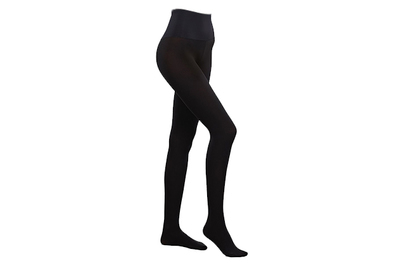
Made with 10% elastane, these tights are easy to pull on and extra comfy, featuring a wide, edge-free waistband.]
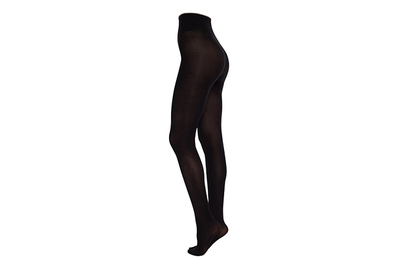
These sturdy, easy-to-pull tights feature 8% elastane. They’re made from recycled material, and you can also recycle them down the line.
This is also likely why cheaper pairs of tights (the kind that you can buy at a drugstore) generally have higher percentages of elastane. Some pairs selling for as low as $5 go well above Islam’s recommended 10% limit.
Islam also said that elastane is key when it comes to sheerness. More-opaque tights generally have a lower percentage of elastane; sheerer, and in turn stretchier, tights usually have a higher percentage. (This will also likely depend on how the yarn is knitted — but more on that in a bit.)
Preeti Arya, a professor at Fashion Institute of Technology, added that elastane is prone to pilling, both by friction and washing. When that happens, she said, “You will see the broken monofilaments like very tiny caterpillars.” Elastane is also prone to degradation by abrasive chemicals often found in detergents, friction, and heat, which is another reason to stay within the 5% to 10% range.